KITZ Aluminium Butterfly Valve Suppliers in India


Choosing a KITZ Aluminium Butterfly Valve — Material Selection Guide
KITZ builds its aluminium butterfly valves as the XJ Series — die-cast aluminium wafer valves with a stainless disc, EPDM seat and stainless trim throughout. If you already know you want an XJ, go straight to the model page for figure numbers, ratings and neck options.
This page is for the decision that comes first: whether an aluminium body is the right choice for your line at all, and how it compares with the cast iron, ductile iron and stainless bodies you are probably weighing it against. Concorde Valves & Automations has been an authorised KITZ distributor since 2011 and manufactures its own butterfly valve range in-house, so we have no reason to push you toward one material over another.
Discuss Your Duty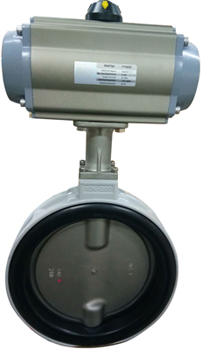
Why Specify an Aluminium Butterfly Valve Body
The instinctive objection to an aluminium valve is corrosion. It is worth dealing with first, because it rests on a misunderstanding of where the aluminium actually sits.
On a resilient-seated wafer butterfly valve, the body never touches the fluid. The EPDM liner covers the bore and the flange faces; the disc is CF8M stainless; the stem, neck, neck connectors and bolting are stainless steel. The aluminium is structural, on the dry side of the liner.
Weight — and What Weight Costs
KITZ puts its die-cast aluminium body at around one third the weight of its conventional cast iron butterfly valves. On a 200 mm or 250 mm valve six metres up a riser, that is the difference between a two-man lift and a chain block.
Less Dead Load on the Pipework
A fitter can hold the valve centred while the studs go in, rather than slinging it. It also reduces the dead load hanging off long horizontal runs, and on marine installations where every kilogram is accounted for.
Thermal Break at the Neck
The stainless steel long neck separates the operating device from the fluid temperature. On chilled water it keeps the handle or actuator above dew point without insulation — condensate dripping off valve handles is a recurring HVAC complaint.
Where Aluminium Is the Wrong Answer
Outside the Ratings
- Above 1 MPa in JIS 10K or ASME Class 150 form
- Above 1.6 MPa in PN16 form
- Outside a −20 to +120 °C service band
Wrong Duty or Environment
- Mineral oils and hydrocarbons — the standard EPDM seat is unsuitable regardless of body material
- Lines that take mechanical abuse — scaffold knocks, crane strikes, being stood on. A cast iron or ductile iron body simply absorbs more of that
In any of those cases, specify iron or stainless and accept the weight. Tell us the fluid, pressure and temperature and we will say plainly whether aluminium fits the duty — we manufacture the iron and stainless alternatives ourselves, so we have no reason to steer you either way.
Aluminium vs Cast Iron vs Ductile Iron vs Stainless Steel
A straight comparison of the four body materials KITZ offers on butterfly valves, on the criteria that actually drive the decision. None of these is better in the abstract — they are better or worse for a given line.
| Criterion | Aluminium (XJ Series) | Cast Iron | Ductile Iron | Stainless Steel |
|---|---|---|---|---|
| Relative body weight | Lightest — around 1/3 of cast iron | Heaviest for the size | Heavy, slightly less than cast iron for equal duty | Heavy |
| Typical pressure ceiling | 1 MPa (10K / Class 150); 1.6 MPa (PN16) | Commonly to PN10 / PN16 | Higher than cast iron at equal wall | Highest of the four |
| Installation labour | Single fitter can centre the valve | Lifting gear on larger sizes | Lifting gear on larger sizes | Lifting gear on larger sizes |
| Resistance to knocks | Lowest — softer body material | High | Highest — ductile rather than brittle | High |
| Wetted path | Stainless disc, EPDM liner — body not wetted | Stainless disc, EPDM liner | Stainless disc, EPDM liner | Stainless throughout |
| Condensation control | Long neck option keeps operator above dew point | Requires insulation | Requires insulation | Requires insulation |
| Best fit | HVAC, chilled water, building services, marine | General water and utility service | Higher duty water, buried and mains service | Corrosive, high-purity and elevated-temperature duty |
Pressure ceilings above are indicative for the resilient-seated butterfly ranges and vary by series and size. Confirm the rating for the specific figure number with us before it goes into a specification.
Where KITZ Aluminium Butterfly Valves Are Used
The common thread across these is water or air service at moderate pressure, where the installation itself — height, access, dead load, insulation — is as much of a constraint as the fluid.
Chilled Water Systems
Chiller and AHU isolation; long neck avoids condensate on the operator
HVAC & Building Services
Risers, plant rooms, pump and header isolation
Water Distribution
Clear water, filtration outlets, distribution branches
Fire Protection
Sectional and zone isolation within the rating
Marine & Shipbuilding
Weight-critical installations and ballast service
Compressed Air
Large-bore header isolation
Process Utilities
Cooling water and service lines in chemical and pharma plants
OEM & Packaged Plant
Skid-mounted equipment where weight and space are constrained
What You Get in the KITZ Aluminium Range
These are the design features that separate the KITZ XJ from a generic aluminium wafer butterfly valve. Full specifications, figure numbers and ratings are on the KITZ XJ Series page.
Patented S-Shaped Disc
Spherical-faced disc seals across its whole face at once rather than wiping progressively into the liner — lower closing torque, longer seat life.
Three Interchangeable Necks
Long, short and neckless builds under U.S. Patent 6676109, convertible later with KITZ neck mounting kits.
ISO 5211 Actuator Pad
Pneumatic and electric actuators mount directly to every neck type, including retrofit in the field.
Stainless Trim Throughout
Disc, stem, neck, neck connectors and bolting are all stainless steel, so the exposed hardware does not rust.
Buying KITZ Aluminium Butterfly Valves in India
Concorde Valves & Automations operates from Mumbai as an ISO 9001:2015 certified valve manufacturer and an authorised KITZ distributor since 2011, supplying against project and MRO requirements across India — mounted with actuators and stroke-tested where the application calls for it.
Because we manufacture our own butterfly valve range as well as distributing KITZ, we are in an unusual position on this decision. Most suppliers can only sell you what they carry. We can tell you which of the two actually fits, because either answer is a sale for us.
When KITZ Is the Right Call
We supply genuine KITZ product through authorised channels, with the manufacturer's test certificate available on request.
- The specification names KITZ and there is no room to deviate
- The plant is standardised on KITZ, and spares commonality matters
- The patented disc and neck design earn their keep on your installation
When Our Own Range Is Enough
If the duty genuinely does not need a branded imported valve, we will say so and quote our own range instead.
- General water, air and utility duty with no brand requirement in the spec
- Manufactured in-house under the same ISO 9001:2015 system
- No imported-brand premium on a valve that will never be asked to justify it
Not sure which applies? Send us the duty and the specification clause, and we will tell you which way it falls.
Ready to Specify? Go to the Model Page
Figure numbers, pressure and temperature ratings, materials of construction, bearing selection by size and the three neck options are all set out on the KITZ XJ Series page. If aluminium is not the right body for your duty, our own manufactured butterfly valve range covers cast iron, stainless steel and spherical disc designs.
Related KITZ Products
Why Buyers Trust Concorde
Every claim below can be checked before you place an order — ask us for the certificate, the distributorship confirmation or the registration number and we will send it.
Authorised KITZ Distributor Since 2011
KITZ product comes through authorised channels, not the grey market — with KITZ's own cast body markings, figure number and pressure rating intact.
ISO 9001:2015 Certified
Our manufacturing runs under a certified quality management system, and the same process governs how bought-in product is received, stored and despatched.
Manufacturer's Test Certificate
Ask at order stage and we supply the MTC against your batch. On KITZ product that is the manufacturer's own certificate, not a document we generate.
MSME Registered
A registered Indian manufacturer — which matters where your procurement policy requires it, and where MSME payment terms apply to the purchase.
Quote Within 24 Hours
Send size, material and end connection and you get price, availability and lead time inside a working day — or a straight answer that we cannot supply it.
We'll Say If It's the Wrong Valve
Because we both manufacture and distribute, we have no reason to push one over the other. If the material is wrong for your fluid or the class is under-rated, we say so before quoting.
Frequently Asked Questions
The XJ Series. KITZ builds its die-cast aluminium wafer butterfly valves as the XJ range, with figure numbers 10XJMEA for JIS 10K and PN16XJME for EN1092 PN16. If you have been quoted a KITZ aluminium butterfly valve, it is an XJ.
For the duties the XJ Series is rated for, yes: 1 MPa in JIS 10K and ASME Class 150, 1.6 MPa in PN16, across a service range of -20 to +120 degrees C. The limit is not usually mechanical strength but chemistry — whether the fluid and the surrounding environment are compatible with an aluminium body. Above those pressures or outside that temperature band, cast iron, ductile iron or stainless is the answer.
KITZ puts its die-cast aluminium body at roughly one third the weight of its conventional cast iron butterfly valves. On a large-diameter valve that changes who can install it: a single fitter can hold and centre the valve between flanges instead of needing lifting equipment.
Not in the way people expect, because the wetted path is not aluminium. On the XJ Series the disc is CF8M stainless steel, the seat is EPDM and the stem, neck, neck connectors and bolting are all stainless. The aluminium body sits outside the EPDM liner. That construction is what makes an aluminium butterfly valve viable on water and chilled water duty at all.
Aluminium where weight, installation labour and condensation control matter: HVAC risers, chilled water, building services, marine. Cast iron or ductile iron where the line runs above the XJ pressure and temperature limits, where the valve will take physical abuse, or where a plant standard mandates iron bodies. There is no universally better material, only a better fit for the duty.
Not with the standard EPDM seat. EPDM performs well on water, chilled water and air but swells in mineral oils and hydrocarbons. Tell us the fluid at enquiry stage and we will confirm whether a different seat or a different KITZ range is required.
Coverage spans roughly 1-1/2 inch to 12 inch depending on model and class — the 10XJMEA covers 1-1/2 to 8 inch on one bearing material and 10 to 12 inch on another, while the PN16XJME runs 2 to 8 inch and 10 to 12 inch. Confirm the exact size against the figure number with us before ordering.
Yes. Concorde Valves & Automations has been an authorised KITZ distributor since 2011, operating from Mumbai and supplying across India. Valves are sourced through authorised channels with KITZ's original markings and documentation, and the manufacturer's test certificate is available on request.
Get a Quote on KITZ Aluminium Butterfly Valves
Tell us the fluid, pressure, temperature, size and flange standard — we will confirm whether aluminium fits the duty and quote the right valve within 24 hours.