
Table of Contents
With the ever-changing landscape of industrialization Automation is no longer an option, it is essential to improve safety, efficiency as well as productivity. A major technological advancement is valve automation the automation of valves. Industries like oil & gas processing, chemical processes manufacturing and water treatment depend heavily on valves to control the circulation of gas, liquids as well as steam. In the past, valves had to be operated manual operation processes. This was laborious and susceptible to human mistakes.
Valve automation improves this process by enabling automated valve control using advanced technology. The change does not just reduce dependence on manual labor, but also improves operational efficiency. Companies like Concorde Valves & Automations are helping industries adopt advanced valve automation solutions to enhance performance and reliability. As industries continue to embrace digital transformation, automated valve systems are becoming a fundamental part of modern infrastructure.
What is Valve Automation?
Valve automation is the use of actuators, sensors, and control systems for operating valves with no manual input. Instead of depending on a individual to manually open or shut the valve Automated systems employ specific instructions, or even real-time information to carry out these tasks.
They are built for rapid response to changes in temperature, pressure and flow, which ensures maximum performance during industrial processes. Automation can also be operated remotely, which means that valves are operated from a centralized control room or even via digital interfaces. Systems such as pneumatic butterfly valves are widely used in industries for efficient and automated flow control.
Key Components and Working Principle
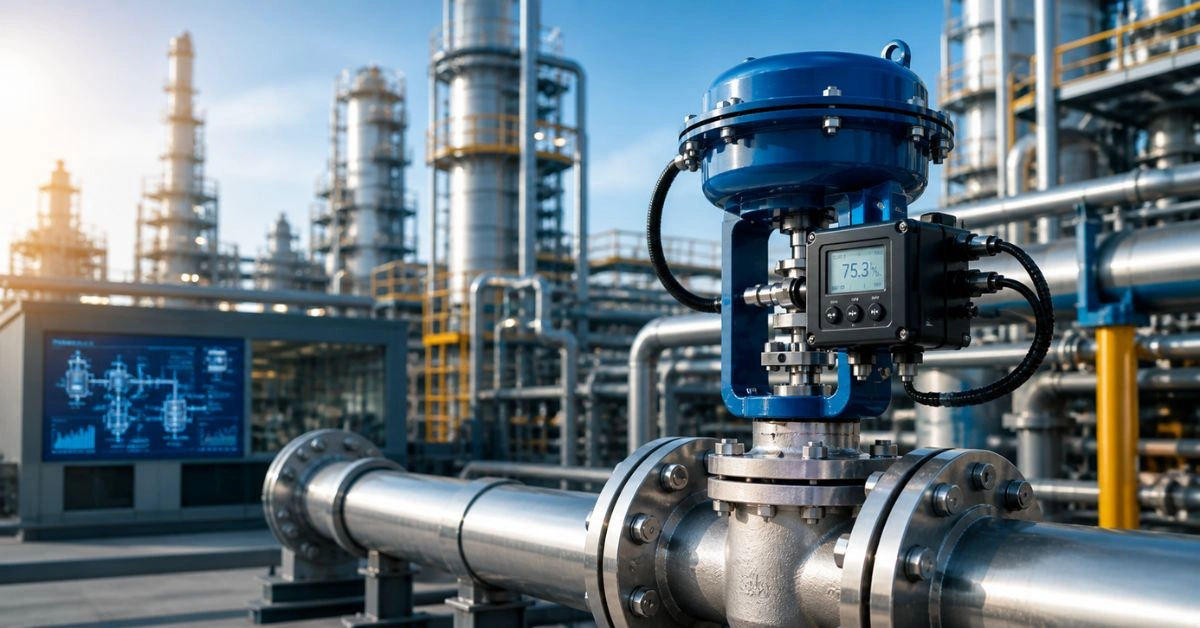
The main elements of a valve automation system are controllers, actuators as well as sensors. Actuators play a role in physically moving the valve while sensors gather real-time information including temperature and pressure. The data is analysed by controllers, which send signals to the actuator to alter the position of the valve according to the information.
The principle of operation is easy sensors are able to detect changes in the environment and controllers analyse the information then actuators take the action required. The continuous loop makes sure that the system functions effectively with no human intervention.
Role of Smart Valves in Modern Industries
Smart valves can take automation one step further, by integrating intelligence into the systems. They are capable of self-monitoring and diagnostics as well as communicating with other devices. Unlike conventional valves, smart valves provide real-time feedback permitting operators to monitor the performance of their devices and spot potential problems prior to them becoming a problem.
This improves the uptime and reliability, as well as reducing downtime. Intelligent valves also adjust to changes in conditions, which makes the perfect choice for industries where accuracy is essential. In the process of moving towards smarter operation, the modern valves play an important role in improving the overall efficiency of systems.
Impact of Valve Automation on Industrial Efficiency
Automation of valves has a significant and measurable impact on industrial efficiency. Through the elimination of manual intervention, process efficiency improves, becomes more stable, and less prone to error. Automated systems, including the best pneumatic butterfly valves, ensure that valves operate precisely according to specifications, maintaining optimal flow rate and pressure at all times.
Another benefit is decrease in operating costs. Since there are fewer manual jobs firms can shift their employees in more strategic positions. Automated systems also reduce risks of leaks malfunctions and accidents, which means reduced maintenance costs and repairs.
Productivity and Cost Benefits
Automated valve systems can contribute to greater productivity through constant and continuous operations. Additionally, they help businesses achieve more efficient resource management, which reduces wasted energy and boosting overall output.
Integration of IoT in Valve Automation
The introduction into IoT (Internet of Things) is further enhancing the capability of valve automation. These valves are connected to networks that are digital, which allows users to control and monitor their operation from a distance. The connection provides actual-time information, allowing for quicker processing and decision-making.
Through IoT companies can use pre-planned maintenance techniques. Instead of awaiting for the valve to fail the systems are able to analyze the data on performance and spot the early indications of wear or problems. This preventative approach minimizes interruptions in operations and makes for smoother running.
Key Industries Benefiting from Valve Automation
Valve automation is used extensively in a variety of industries where precision control of flow is vital. Valve automation is crucial in keeping safety, efficiency and compliance with regulations.
Major Industrial Applications
The major industries that benefit from valve automation comprise:
- Gas and oil for pipeline control of flow and security management
- Chemical processing is used to process potentially hazardous substances with precision
- Treatment of wastewater and water to ensure efficient fluid control
- Generation of power to regulate cooling and steam systems
- Production to ensure consistency in processes of production
Challenges in Implementing Valve Automation
Although it has many benefits however, the process of implementing valve automation comes with a few pitfalls. The most significant issue is the initial cost in the setup of automated valves. The installation of advanced equipment, installations and integration could cost a lot, particularly for smaller and mid-sized businesses.
Another issue is the requirement for qualified personnel to run and maintain the systems. Automation technology requires technical know-how as well as investment in the training of their employees. In addition, the integration of automation into existing infrastructure is often difficult and take a lot of time.
Future Trends in Valve Automation
Valve automation’s future is connected to advances in the realm of digital technologies. Machine learning and artificial intelligence will likely be a major factor in improving the system’s intelligence. This technology will help valves to take more precise decision based upon historical and live information.
Cloud-based cloud platforms and wireless communications are also growing in popularity and allowing more adaptable and adaptable technology for automation. In the future, as industries adopt intelligent manufacturing techniques and technologies, valve automation is expected to become ever more advanced and crucial.
Final Thought
increasing efficiency, safety, and reliability, safety and the reliability. By reducing manual interventions to the ability to monitor in real time using the Internet of Things, these automated valve systems are changing how industrial processes are being managed.
Although challenges like cost and technical complexity are present however, the advantages in the long term surpass the drawbacks. While technology is constantly evolving and improve, valve automation will continue to be an important driver for industry-wide innovation, helping companies improve their productivity and sustain expansion.
pneumatic butterfly valves
Pneumatic butterfly valves are quarter-turn valves operated by compressed air, used to control or isolate flow in pipelines. They offer fast actuation, reliable sealing, and automation compatibility, making them ideal for water treatment, chemical, oil, gas, and industrial process systems. widely used.
Product Brand: Concorde Valves & Automations
Product Currency: INR
Product In-Stock: InStock
5