
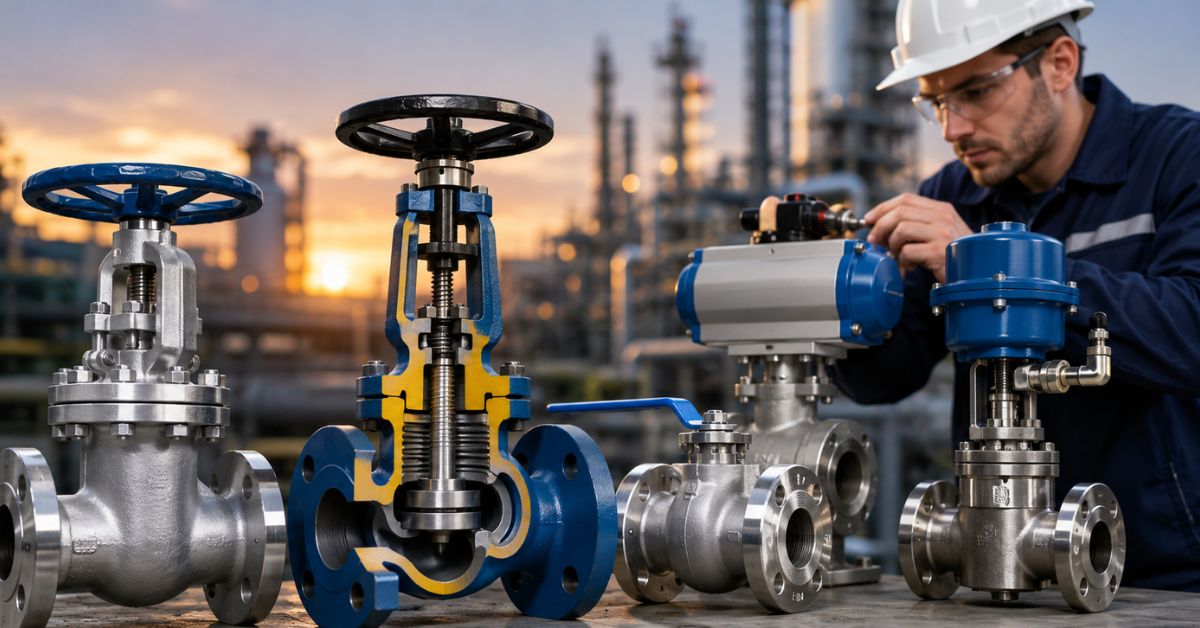
Industrial valves are the unsung workhorses of any process plant. Whether it’s controlling flow in a water treatment facility, handling corrosive chemicals, or regulating pressure in an oil & gas pipeline, valves are expected to perform reliably day after day. However, common valve failures can occur if valves are not selected, installed, and maintained correctly, leading to unplanned downtime and costly repairs.
At Concorde Valves & Automations, we’ve worked with plant engineers and procurement teams across industries who’ve dealt with unplanned downtime, leakage issues, and costly replacements — most of which could have been avoided. In this blog, we break down the most common valve failures and practical ways to prevent them.
1. Seat and Seal Leakage
One of the most frequent issues is leakage through the valve seat or seals. This usually happens due to wear and tear over time, improper seat material selection, or exposure to fluids and temperatures beyond the seal’s rated capacity.
Prevention: Always match seat and seal materials (PTFE, EPDM, Viton, metal-seated, etc.) to the specific fluid, temperature, and pressure conditions of your application. Regular inspection schedules also help catch early signs of seal degradation before they lead to full leakage.
2. Corrosion and Erosion
Valves handling aggressive chemicals, seawater, or abrasive slurries are highly susceptible to internal corrosion and erosion. Over time, this wears down internal components, affecting sealing performance and structural integrity.
Prevention: Choosing the right body and trim material — such as stainless steel 316/316L for corrosive media, or hardened trims for abrasive slurry service — significantly extends valve life. Lining options and coatings can offer additional protection in extreme environments.
3. Improper Valve Sizing
A valve that’s too large or too small for the application can cause a host of problems: poor flow control, excessive pressure drop, cavitation, or premature wear. This is often the result of selecting valves based on pipe size alone rather than actual process conditions.
Prevention: Valve sizing should always be based on flow rate, pressure drop, and fluid characteristics — not just line size. Consulting with valve specialists during the design phase can prevent costly resizing later.
4. Actuator Malfunctions
For automated valves, actuator failure is a common cause of unexpected downtime. This can stem from incorrect actuator sizing, electrical faults, air supply issues in pneumatic actuators, or lack of maintenance.
Prevention: Ensure actuators are correctly sized for the torque requirements of the valve, and that air quality (for pneumatic systems) or power supply (for electric actuators) is consistently maintained. Scheduled testing of actuator response and fail-safe functions is essential, especially in critical applications.
5. Improper Installation
Even a high-quality valve can fail prematurely if installed incorrectly — misaligned flanges, incorrect torque on bolts, or installing a valve in the wrong flow direction are common culprits.
Prevention: Always follow manufacturer installation guidelines. Proper flange alignment, correct bolt torque sequence, and verifying flow direction arrows before installation can prevent avoidable failures right from day one.
6. Lack of Regular Maintenance
Many valve failures aren’t due to poor manufacturing but simply neglected maintenance. Dust accumulation, lubrication breakdown, and unnoticed minor leaks can escalate into major failures over time.
Prevention: Implement a preventive maintenance schedule that includes visual inspections, lubrication of moving parts, seal checks, and actuator testing at defined intervals based on criticality of the application.
7. Water Hammer and Pressure Surges
Sudden closure of valves, especially in large pipelines, can cause water hammer — a pressure surge that damages valve internals, pipe joints, and supports.
Prevention: Using valves with controlled closure mechanisms, or incorporating slow-closing actuators, can significantly reduce the risk of water hammer damage.
Quick Checklist: Preventing Valve Failures
- Match valve and seal materials to the fluid, temperature, and pressure conditions
- Size valves based on actual flow and process data, not just pipe diameter
- Choose corrosion or erosion-resistant materials for harsh media
- Follow correct installation procedures, including flange alignment and bolt torque
- Test actuators regularly for response time and fail-safe operation
- Schedule periodic inspection, lubrication, and seal checks
- Avoid sudden valve closures in high-pressure pipelines
- Keep spare seals and critical spare parts on hand for quick replacement
Conclusion
Valve failures are rarely random — they’re almost always the result of a mismatch between valve selection, installation practices, and maintenance routines. By understanding these common failure points and addressing them proactively, plants can significantly reduce downtime, maintenance costs, and safety risks.
At Concorde Valves & Automations, we help clients select the right valve and automation solutions for their specific process conditions, backed by technical expertise and quality-certified products. If you’re facing recurring valve issues or planning a new installation, our team is here to guide you toward a reliable, long-term solution.