
Table of Contents
- Where the water comes from, and where it collects
- What standing condensate actually does
- Drains: the choice that decides how much air you waste
- The non-return valve nobody specifies carefully
- Isolation, so maintenance does not mean a shutdown
- What to do with the condensate once it is out
- A practical checklist
- Frequently asked questions
- Where should condensate drains be installed in a compressed air system?
- Is a timer drain or a zero air loss drain better?
- Why does my automatic drain keep clogging?
- Do I still need to drain the receiver if I have a moisture separator?
- Which check valve suits a compressed air line?
- Can compressed air condensate go straight to drain?
Compressed air is the most expensive utility in most plants, and the water it carries is the reason a lot of that money gets wasted. Air leaves a compressor hot and saturated. As it cools in the receiver, the dryer and the pipework, that moisture condenses out, and from then on it is looking for somewhere to do damage.
Most plants deal with this reactively. Someone notices rust in a filter bowl, or a pneumatic cylinder starts sticking, and the response is to replace the component. The condensate is still there. This is about the valves and fittings that stop it becoming a recurring problem.
Where the water comes from, and where it collects
Air at the compressor discharge is hot and holds a lot of water vapour. The aftercooler drops the temperature, the vapour condenses, and a moisture separator downstream of the aftercooler removes the bulk liquid. A wet receiver does more of the same job simply by giving the air time and surface area to cool, and a receiver in that position can remove a substantial share of the water vapour before the air reaches the dryer at all. That reduces the load on the dryer and the filters downstream.
After that, condensate keeps forming anywhere the air cools further. The points that need attention are the moisture separators, the filters, the receivers, the dryer, and every low point and dead leg in the distribution piping. On a warm day, air that was properly dried at the plant room can still drop below its dew point out in the pipework, and that water collects at the lowest point it can find.
If the air is dried properly the pipework should stay reasonably clear, but low points still need either a drip leg or a drain. Assuming the dryer has handled it and skipping the drains is how water ends up at the point of use.
What standing condensate actually does
Left in a receiver, condensate corrodes the shell from the inside and the resulting rust travels downstream as particulate. That rust then does three things: it abrades cylinder bores and valve seats, it blinds filter elements early, and it lodges in the seats of small valves and stops them sealing.
Downstream of that, water strips lubricant out of pneumatic cylinders and rotary actuators, spoils paint and product in any direct-contact process, and shortens dryer and filter life. In food, pharmaceutical and other regulated production it becomes an air quality compliance problem rather than just a maintenance one.
None of this is dramatic. It is a slow, cumulative cost that shows up as shortened component life rather than as a failure you can point at.
Drains: the choice that decides how much air you waste
A condensate drain has a simple job, remove liquid without throwing away compressed air while doing it. There are three common approaches and the difference between them is money.
Manual drain cocks
Cheapest and entirely dependent on somebody remembering. Fine on a small single-compressor installation where an operator opens it each shift. On anything larger it will be forgotten, and the first sign is water at the point of use.
Timer-based automatic drains
A solenoid valve opens for a set period at a set interval. This removes the human dependency, which is the main point. The trade-off is that it opens whether or not there is condensate to remove, so every cycle vents some compressed air.
Our air line valves aside, the timer drain itself is worth specifying carefully. On our timer units the ON time is adjustable from 0.5 to 10 seconds and the OFF cycle from 0.5 to 45 minutes, with a manual override reset, so the interval can be tuned to how much condensate the system actually produces rather than left on a factory default. Body material is CF8 stainless with a 1/2 inch BSP connection, rated up to 10 kg/cm² and 85°C, with coil voltages of 230V, 110V, 24V and 12V in AC or DC available on request.
One detail that matters more than it sounds: a timer drain needs a strainer upstream. The discharge port is reduced, and the rust and scale a compressed air line carries will eventually clog it. An isolation valve and strainer are supplied with our drain valves for exactly this reason, so the unit can be cleaned and serviced without shutting the air line down.
Zero air loss drains
These sense the condensate level rather than working to a clock. Condensate collects in a small reservoir and the valve opens only when it is full, closing again when it is empty. A small amount of liquid stays behind to seal the outlet, much like the trap under a sink, so no compressed air escapes.
Mechanical float versions need no power at all, which makes them useful at remote drain points and on oily condensate. On any system large enough for the air loss to matter, the energy saved usually justifies the higher purchase price, because a timer drain venting several times an hour adds up over a year of running.
The non-return valve nobody specifies carefully
Air lines need check valves in several places, at the compressor discharge to stop backflow when a machine unloads, between parallel compressors so one does not feed another, and at the receiver outlet to hold stored air when the line downstream is isolated.
The usual choice is a small spring-and-disc check, and on clean air it works. On a real compressed air line it often does not last, because the line is not clean. Rust flakes off the inside of the receiver and the pipework, scale comes off threaded joints, and that material lands on the seat face and holds the disc off its seat.
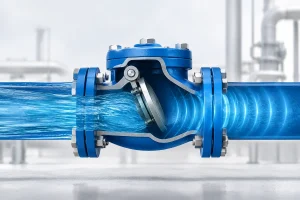
This is where a ball type non return valve earns its place. The ball is free floating and rolls as it seats, so it does not jam on particulate the way a hinged disc does, and the seating surface gets a rolling contact rather than the same point every time. It closes more slowly than a spring-assisted disc, so it is not the choice where surge is the concern, but on a dirty air line it will still be sealing long after a disc check has stopped. Larger lines take the flanged end version of the same design.
Isolation, so maintenance does not mean a shutdown
The thing that quietly determines whether condensate management actually happens is whether a fitter can service a drain or a filter without stopping production.
Every drain point, separator and filter wants an isolation valve upstream of it. On small bore lines a brass gate valve is the conventional choice for water and air service, economical in small diameters and with a full bore straight-through path so there is no pressure drop when open. On lines that are opened and closed frequently a manual ball valve is better, because a quarter turn is faster and the lever shows position at a glance, and gate valves do not tolerate being left partly open.
Where the isolation needs to be remote or interlocked, a pneumatic ball valve or an electric ball valve on the same body takes over, and the ISO 5211 mounting pad means the actuator can be changed without replacing the valve.
What to do with the condensate once it is out
Compressed air condensate is not clean water. It carries compressor lubricant, and in most jurisdictions it cannot go to drain untreated. It needs to pass through an oil water separator before disposal, and that applies to condensate from every drain point, not just the receiver.
This gets skipped surprisingly often, usually because the drains were retrofitted and the discharge piping was routed to the nearest floor drain. It is worth checking where yours actually goes.
A practical checklist
Walk the system and confirm each of these. Is there a moisture separator downstream of the aftercooler, and is its drain working? Does the receiver have a functioning automatic drain rather than a manual cock nobody opens? Is there a drain at every filter, at the dryer, and at every low point and dead leg in the distribution pipework? Are the timer drains fitted with strainers, and have those strainers been cleaned this year? Are the drain intervals tuned to actual condensate load, or still on the default? Do the check valves hold, and are they a design that tolerates the rust your line carries? Can each drain and filter be isolated for service without stopping the line? And does the condensate reach an oil water separator?
Most of those cost nothing but a walk round with a torch.
Concorde Valves & Automations manufactures auto drain valves, moisture separators, ball type non return valves and the wider pneumatic range from Mumbai, supplied across India, along with diaphragm operated solenoid valves for air and water service. ISO 9001:2015 certified, with material test certificates available on request. We do not make dryers, filters or oil water separators, so if what you need is one of those we will tell you rather than sell you the nearest thing we have. Send us your compressor capacity, receiver size and line details and we will tell you what fits. Request a quotation and we will come back within 24 hours.
Frequently asked questions
Where should condensate drains be installed in a compressed air system?
At the moisture separator after the aftercooler, on the air receiver, at every filter and at the dryer, and at every low point and dead leg in the distribution pipework. Anywhere air cools and liquid can collect needs a drain.
Is a timer drain or a zero air loss drain better?
A timer drain is cheaper and suits smaller systems where the vented air is a minor cost. A zero air loss drain opens only when condensate is present, so no compressed air escapes, and on larger systems the energy saving normally justifies the price difference.
Why does my automatic drain keep clogging?
The discharge port on a timer drain is reduced, and rust and scale from the receiver and pipework will block it. Fit a strainer upstream and clean it on a schedule. An isolation valve alongside it lets you do that without shutting the line down.
Do I still need to drain the receiver if I have a moisture separator?
Yes. A separator removes liquid from the air stream, but the receiver collects its own condensate as the air cools inside it, and that needs its own drainage path.
Which check valve suits a compressed air line?
One that tolerates particulate. Air lines carry rust and scale, and a hinged disc check will eventually be held off its seat by it. A free-floating ball design rolls as it seats and is far less prone to jamming, which is why it outlasts a disc check on this duty.
Can compressed air condensate go straight to drain?
Generally no. It contains compressor lubricant and needs to pass through an oil water separator before disposal. Check what applies locally, and check where your existing drain lines actually discharge.